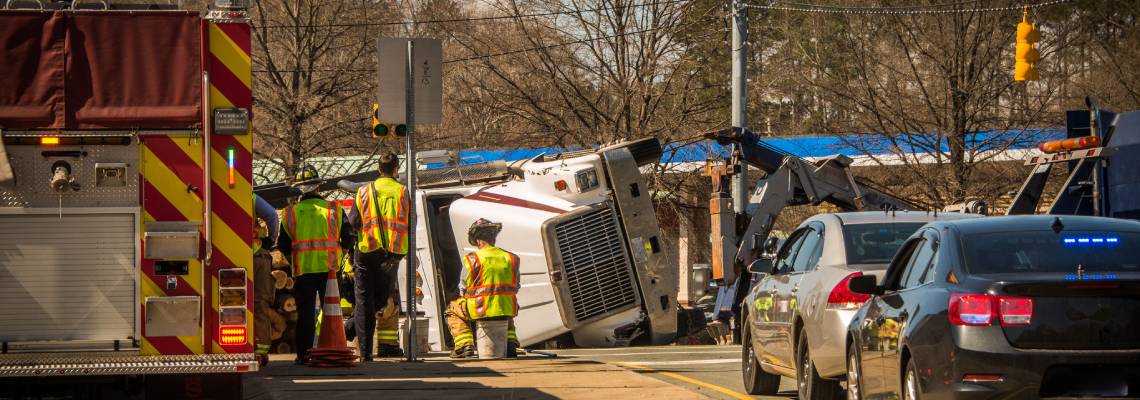
Common Causes of Truck Accidents and Who May Be Liable
After a collision with a commercial truck, the driver may seem like the obvious person to blame. But truck accidents can result from driver mistakes, unsafe company practices, maintenance failures, or improperly secured cargo, and more than one party may be responsible. Determining liability requires looking beyond what happened on the road to why it happened and who was responsible for preventing it.
At Whit A. Thomas, Attorney at Law, we represent people injured in truck accidents throughout Baldwin County, Alabama, including Summerdale, Elberta, Gulf Shores, and surrounding communities. We investigate the driver, trucking company, vehicle, cargo, and other potential causes to identify the parties that may be responsible for the collision. Call us now to schedule a free initial consultation.
Driver Error and Fatigue
Speeding, distraction, unsafe lane changes, following too closely, impairment, and fatigue can all contribute to truck accidents. Because commercial trucks require more time and distance to stop than smaller vehicles, unsafe driving can have serious consequences.
Federal rules limit how long many commercial truck drivers may drive and remain on duty. Under the Federal Motor Carrier Safety Administration's hours-of-service rules, a property-carrying driver generally may drive for up to 11 hours after 10 consecutive hours off duty and may not drive beyond the 14th consecutive hour after coming on duty, subject to applicable exceptions.
When fatigue may have contributed to a crash, driver logs and electronic logging records may show how long the driver had been working and whether applicable limits were followed.
Trucking Company Responsibility
A trucking company may be responsible when its own actions contribute to a crash. Depending on the circumstances, that could involve issues with hiring, training, supervision, scheduling, vehicle maintenance, or company safety practices.
A trucking company may also be responsible for negligence by one of its drivers. Under Alabama law, an employer may be held responsible for an employee's negligent conduct when the employee was acting within the scope of employment. This means liability may extend beyond the driver even when the company's own conduct did not cause the crash.
Poor Truck Maintenance
Worn brakes, damaged tires, steering problems, defective lights, and other equipment problems can contribute to a collision when they affect the safe operation of the truck. When a mechanical problem contributes to a crash, determining liability may require looking at who was responsible for inspecting, maintaining, or repairing the vehicle.
Depending on the facts, responsibility may involve the motor carrier or a separate maintenance or repair provider. When we evaluate a truck accident claim, we examine whether an equipment failure contributed to the collision and who was responsible for the truck's condition.
Improperly Loaded or Secured Cargo
Cargo that shifts, falls, or changes a truck's balance can contribute to loss-of-control crashes, rollovers, and roadway hazards.
Federal cargo-securement rules require covered commercial vehicles operating in interstate commerce to properly secure cargo against shifting or falling during transportation. The FMCSA's cargo-securement requirements set general securement standards and additional requirements for certain types of cargo.
Determining liability requires examining who loaded, secured, inspected, and transported the cargo and what each party was responsible for doing.
Multiple Parties May Share Responsibility
More than one person or business may contribute to the same truck accident. Identifying one potentially responsible party does not necessarily explain every cause of the collision.
For example, a fatigued driver may be operating a truck with poorly maintained brakes. The driver's conduct, the circumstances surrounding the driver's schedule, and responsibility for maintaining the braking system could each require investigation. A cargo problem could introduce another party responsible for loading or securing the freight.
This is one reason determining liability after a commercial truck crash can require records from several sources. The evidence must connect each potentially responsible party to conduct that contributed to the collision.
Evidence Can Reveal the Cause
Evidence from the truck, driver, trucking company, accident scene, and other sources can help establish why a crash happened and who may be responsible. Depending on the circumstances, relevant evidence may include:
Driver logs and electronic logging records
Vehicle inspection and maintenance records
Electronic control module or other vehicle data
Dashcam or surveillance footage
Cargo and loading records
Driver qualification and employment records
Photographs of the vehicles and accident scene
Police reports and witness statements
Different records can answer different liability questions. Driver logs may help establish whether fatigue was a factor, while maintenance records can reveal equipment problems. Cargo records may identify who loaded or secured a shipment.
Some electronic and business records may not remain available indefinitely. Identifying and seeking relevant evidence early can help establish the circumstances surrounding the crash.
Alabama's Contributory Negligence Rule
Alabama follows a strict rule called contributory negligence. If you were negligent and your own actions contributed to causing your injuries, you may be unable to recover compensation through a negligence claim. For example, a trucking company might argue that you contributed to the crash by making an unsafe lane change, failing to yield, or taking another action that helped cause the collision.
However, the trucking company cannot defeat your claim simply by blaming you for the accident. It must prove the facts needed to establish contributory negligence. Evidence such as photographs, witness statements, vehicle data, and video footage may help show what actually happened and whether your actions contributed to the collision.
Whether contributory negligence applies depends on the specific facts of the case. If the evidence does not establish that your own negligence contributed to your injuries, this defense would not bar recovery on that basis.
Get Answers About Liability After a Baldwin County Truck Accident
After a commercial truck crash, important information about the driver, vehicle, cargo, and trucking operation may be held by several different people or businesses. At Whit A. Thomas, Attorney at Law, we can investigate the circumstances of the collision, examine available evidence, and evaluate which parties may be legally responsible.
Our founding attorney, Whit A. Thomas, has represented personal injury clients in Alabama since 1980. We handle truck accident claims and can examine issues involving driver conduct, trucking-company practices, vehicle maintenance, cargo, and other circumstances that may have contributed to a collision.
We serve Baldwin County, including Summerdale, Elberta, Gulf Shores, and surrounding cities. If you were injured in a commercial truck collision, our Baldwin County truck accident representation can help you understand what the evidence may show about the cause of the crash and potential liability.
Contact us for a free consultation to discuss your truck accident and the parties who may be responsible.